
What Affects the Cost of Landscaping in Hamilton? Factors Every Homeowner Should Understand Before Getting a Quote
What Affects the Cost of Landscaping in Hamilton? Factors Every Homeowner Should Understand Before Getting a Quote
Summary
This guide explains why landscaping projects in Hamilton, Ontario, cannot be accurately priced without a site visit—and identifies the five factors that actually determine your final cost. The core idea: landscaping is not a commodity. Scope, materials, site realities, timing, and the contractor’s approach interact differently on every property, making a generic price range meaningless and a professional site visit essential.
Key Takeaways
- Generic online price ranges don’t apply to your project. Quotes vary because the variables — scope, materials, the physical state of your property, and timing — interact differently on every site.
- Scope is the most fundamental cost driver. A project combining a pool, paving, planting, and outdoor structures delivered by a single team has a different cost structure than the same elements split among separate contractors.
- Material choices have the greatest impact on the final cost. The decision between concrete and premium stone for a patio, or vinyl liner versus fibreglass for a pool, affects upfront cost, installation complexity, and long-term maintenance — often significantly.
- Your site is the variable most homeowners underestimate. A sloped property and a flat city lot can share identical design goals and arrive at very different costs because the underlying work — grade management, access logistics, and existing structures are entirely different.
- Timing affects both availability and outcome. Reputable contractors book months in advance; certain materials and work types have optimal seasonal windows that affect quality, not just convenience.
- A proper quote breaks out labour, materials, timeline, and scope boundaries. A one-line estimate is not a quote — and accepting one is the most common way homeowners end up surprised mid-project.
- The only number that matters is the one based on your specific property. A thorough site assessment by a qualified landscape contractor is what makes that possible — and it starts with a free site visit.
Topics Covered
Why landscaping costs vary · Scope of work and its cost implications · Material trade-offs across paving, structures, and pools · Site realities unique to Hamilton properties · Seasonal timing and contractor availability · What a proper quote includes · How to prepare for your first site visit in Hamilton
Who This Is For
Hamilton-area homeowners who are seriously considering a landscaping project — from a first patio to a full outdoor transformation — and want to understand what shapes the cost before requesting a quote or committing to a conversation.
Author / Source: Green Collar, a landscaping company serving Hamilton and surrounding communities, offering complete outdoor project management from design through build and seasonal maintenance.
If you’ve tried to research landscaping costs for a Hamilton, Ontario property, you’ve probably found numbers that tell you almost nothing, but ranges so wide they could describe a garden refresh or a full outdoor transformation. That confusion isn’t an accident. The cost of landscaping projects in Hamilton, Ontario, is shaped by a combination of variables that are unique to each site, scope, and set of material decisions. This article breaks down the five factors that determine your project’s cost.
Why Can’t You Google the Cost of Your Landscaping Project?
You’ve searched. You’ve found ranges. Maybe it was “$5,000–$50,000” or “depends on your project,” which are technically accurate but practically useless if you’re trying to understand whether your backyard vision is within reach or beyond.
The reason generic pricing doesn’t exist for landscaping in Hamilton, Ontario, isn’t evasion. It’s the structure of the work itself. Unlike buying a car, where you’re paying a set price, a landscaping project is influenced by at least 5 factors, each of which can significantly shift the final cost.
A contractor who quotes your project sight unseen based on what you described over the phone isn’t quoting your project. They’re quoting a generic version that shares a few surface details with yours. The number may be close. It may also be off by 40 percent in either direction.
Here are the five factors that actually determine your project’s cost.
Factor 1: The Scope of Work
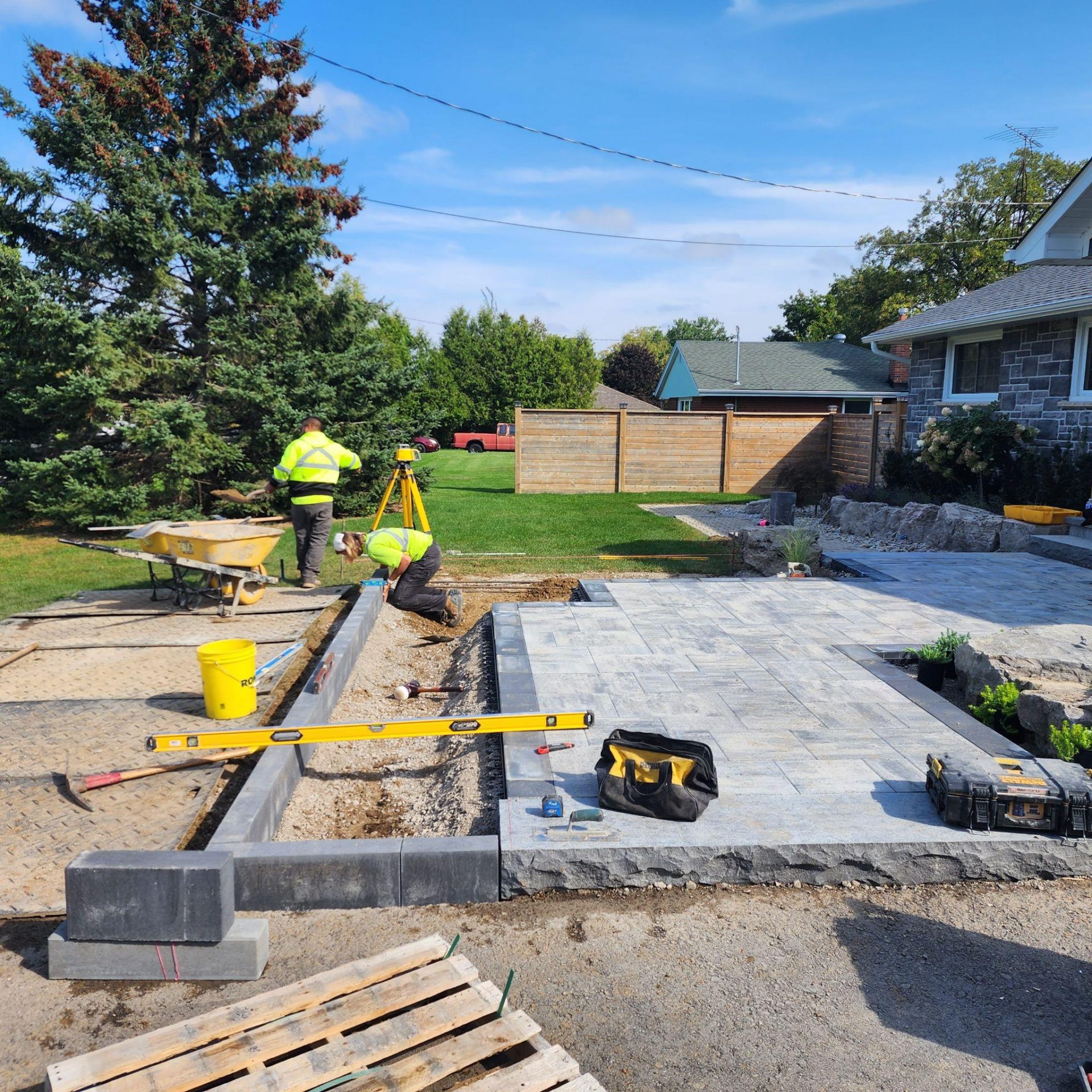
The most fundamental cost driver is also the most variable. Project scope in landscaping ranges from a narrow, well-defined engagement, like seasonal lawn care, a single interlocking patio installation, a planting refresh, to a complete property transformation, designed and delivered as a unified commission.
The distinction matters because scope determines not just the volume of work, but the structure of how it’s managed. A project that combines pool installation, surrounding hardscaping, a pergola, and a professional garden design delivered by one team has a fundamentally different cost structure than the same elements delivered by four separate contractors coordinating around each other’s schedules. Integration has value, but it also has a cost that a fragmented approach often disguises until invoices start arriving.
At the narrower end, Green Collar offers dedicated service lines: landscape design, garden and property maintenance, and individual build projects. For commercial clients, commercial landscape maintenance operates on its own scope and pricing model. At the broader end, a full-property transformation, grading, pool, paving, soft landscaping, lighting, and seasonal maintenance are planned and priced as an integrated whole.
What most homeowners don’t anticipate is scope expansion: the project that starts as “just a patio” and grows to include retaining walls once the grade turns out to be steeper than expected, or water management solutions once the soil conditions are understood. The best protection against that kind of surprise is a thorough initial conversation that identifies what the project actually requires — not just what the homeowner initially envisions. For a broader view of what landscaping involves across different project types, our landscaping in Hamilton guide is a useful starting point.
Factor 2: Material Choices and Their Trade-Offs
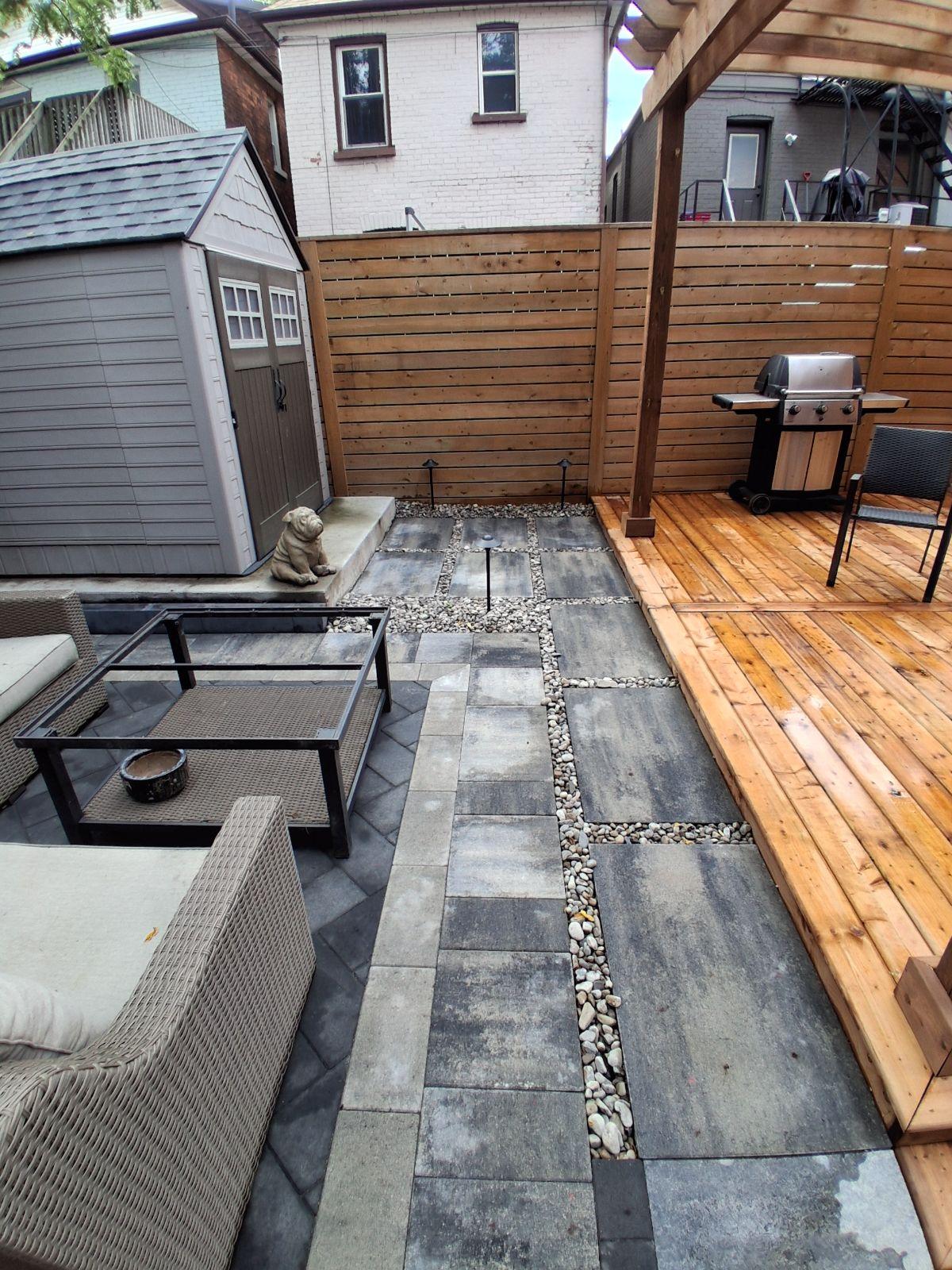
No single decision has a greater impact on the cost of a landscaping project than the materials it’s built with. Materials affect upfront costs, installation complexity, long-term maintenance, and how the finished space performs throughout the seasons. Understanding the trade-offs before you specify anything is how you avoid being surprised by the final number.
For paved surfaces — patios, walkways, walls, and steps — the choice between concrete pavers, interlocking stone, natural stone, and flagstone carries real cost and performance implications. Interlocking stone sits in the mid-range for materials cost and performs well in Hamilton’s freeze-thaw climate when installed on a proper aggregate base. Natural stone costs more upfront but ages differently than manufactured products — it requires less intervention over time and carries a visual quality that concrete pavers rarely match at any price point. The gap between these choices at installation widens further when long-term maintenance is factored in.
For outdoor living structures — pergolas, pavilions, and enclosures — the decision between pressure-treated lumber, cedar, composite, and aluminum affects both upfront costs and ongoing maintenance requirements over the structure’s life. For pool installation, above-ground, in-ground vinyl liner, and in-ground fibreglass each has a very different cost and longevity profile. An in-ground fibreglass pool costs more upfront but delivers a finished quality and usable lifespan that a vinyl liner cannot match over a 15–20-year horizon.
For soft landscaping — topsoil, sod, planting, and irrigation — grade and specification matter significantly. Imported topsoil, premium sod, and a designed irrigation system are categorically different from budget-tier alternatives, and the difference shows in the first season.
Material decisions made in the planning phase have the greatest impact on the final cost. Our hardscaping, outdoor living, and pool renovation services walk through what each service line entails. For a full picture of what different budgets can achieve, see our guide to backyard landscaping ideas for Hamilton homes.
Factor 3: Your Site Conditions
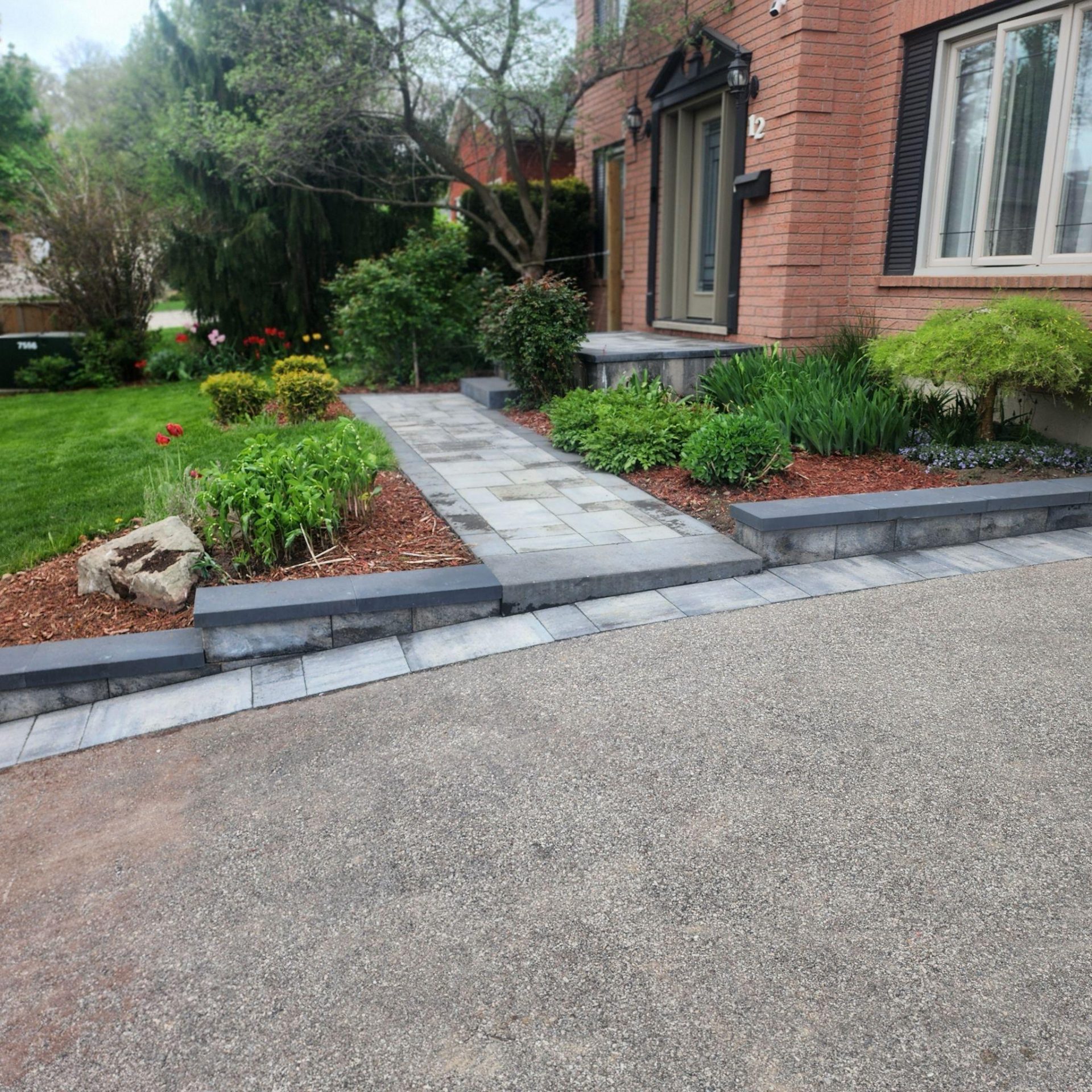
This is the factor homeowners least expect, and the one most often revealed only when a contractor walks the property. Two homeowners can want identical finished backyards and receive quotes that differ by tens of thousands of dollars. The difference is nearly always the site.
Slope and grade are the most immediate variables. For flat lots in Hamilton’s lower city, excavation is relatively straightforward. For properties with significant grade changes, the project requires retaining walls, drainage engineering, and more complex excavation that fundamentally changes the cost profile. A flat Hamilton lot and a sloped Ancaster property can share identical design goals and arrive at very different project costs because the underlying work is completely different.
Soil and drainage define what the project is built on—and whether it will hold. Clay-heavy soil, common across much of Hamilton’s lower city, absorbs water poorly. That drives frost heave in paved surfaces, root stress in plantings, and ongoing problems in any project that doesn’t build water management into the design from the start. Addressing these site conditions at the planning stage costs less than correcting them after installation.
Site access is a practical variable that consistently surprises homeowners. A backyard accessible only through a 36-inch side gate — common on older properties — requires hand-carrying materials and equipment rather than machine access. The labour cost differential is real on every project where it applies. Existing structures also add scope before any new work begins: old concrete slabs, deteriorating decks, and buried debris all require removal. Local building permits apply to certain removals and new installations. Underground utilities require a locate before excavation — a legal requirement under Ontario’s utility locate program.
This is the primary reason a thorough site assessment is not optional. Your site — not your design preferences — determines whether the project costs $20,000 or $40,000 for the same finished outcome.
Factor 4: Project Timing and Seasonality
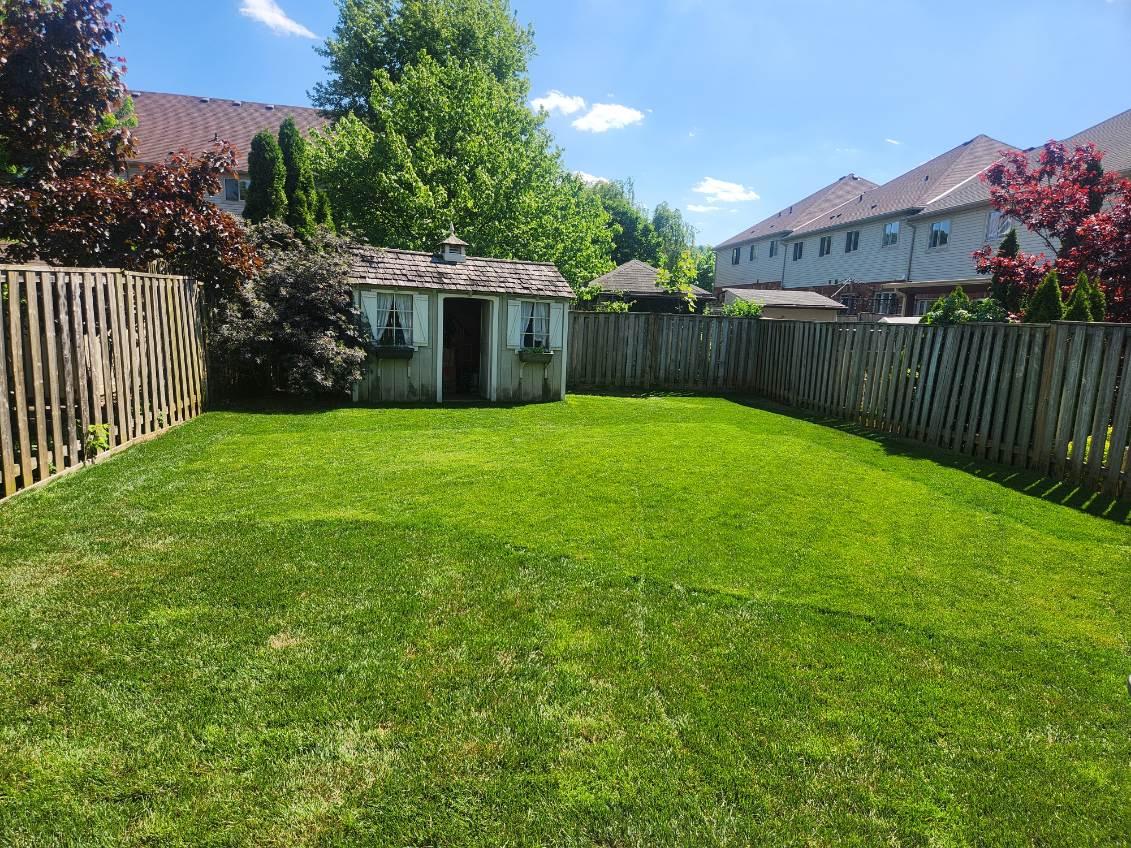
Most homeowners plan their landscaping project around when they want it finished. Fewer plan for how timing affects both the availability of the right contractor and the conditions under which the work is done.
Reputable contractors book their spring seasons months in advance. The assumption that booking later creates room to negotiate is not how landscaping works — if anything, late-season availability exists because earlier slots were claimed by clients who started planning in January or February. If you want a specific team for a specific timeline, the conversation needs to begin well before you think it does.
Material availability shapes cost in ways that aren’t always predictable. Stone, pool components, and structural lumber are each subject to supply chain conditions that can affect both price and lead time from one season to the next. Seasonal pricing — when applicable — reflects demand cycles, not discounts for waiting.
The season also shapes what work is done well. Fall is ideal for planting and garden renovation, when root establishment happens before winter dormancy. Late summer is the right window for interlocking installation before the frost cycle begins. In-ground pools need to be planned well in advance of swim season to allow for permit approvals, equipment delivery, and schedule availability. Timing your project to the right phase of the calendar isn’t just logistical — it affects the quality of the finished result.
Factor 5: The Contractor’s Approach
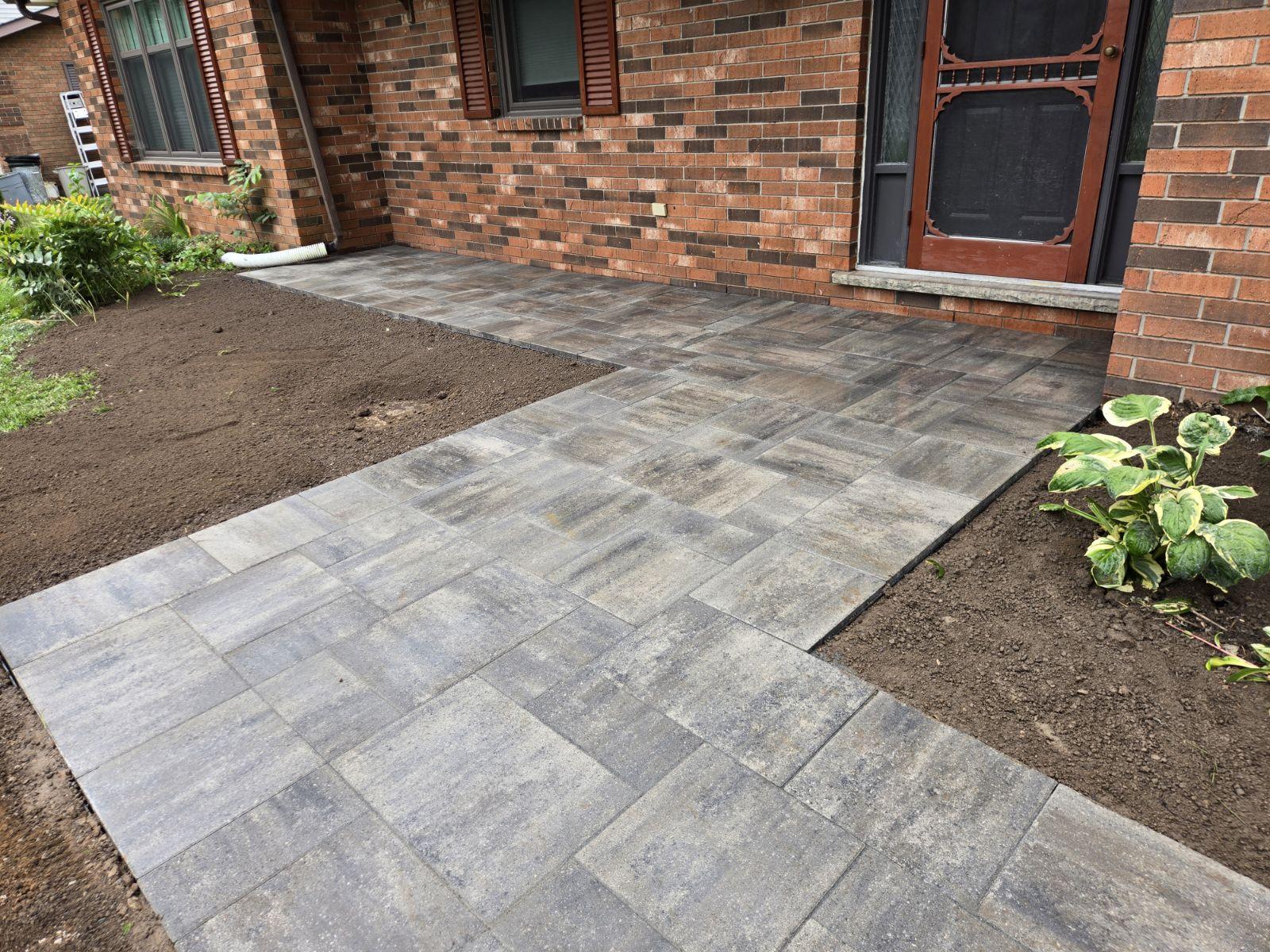
Everything in this article to this point affects cost before you’ve spoken to a single person. What happens in that conversation — and the ones that follow — determines whether the number you receive reflects your actual project or a generic approximation of it.
The choice between single-trade contractors and a full-service landscaping company affects both cost and outcome. A homeowner managing separate contractors for design, pool work, paving, and maintenance is coordinating four contracts, four timelines, and four points of accountability, and absorbing that overhead personally. A full-service landscaping company integrates those elements into a single project scope, contract, and team. The result is typically more cohesive, and the process considerably less stressful. For landscaping projects in Hamilton, Ontario, of any meaningful complexity, this structural difference matters.
A proper written quote is not a single line. It breaks down labour, materials, equipment, the timeline, the payment schedule, and the scope boundaries, including the conditions under which changes are managed. A one-line quote is not a quote. It’s an estimate that will evolve in ways the homeowner has no framework to anticipate or challenge.
The site visit is a diagnostic, not a sales call. When a landscape contractor walks your property, they’re assessing the actual variables, such as grade, soil, access, existing structures, utility locations, and gathering the information needed to produce a number that will hold. A quote produced without that visit is not based on your project.
For more on evaluating contractor approaches before you commit, read our guide on how to choose a landscaping company in Hamilton.
How to Prepare for Your First Landscaping Quote in Hamilton?
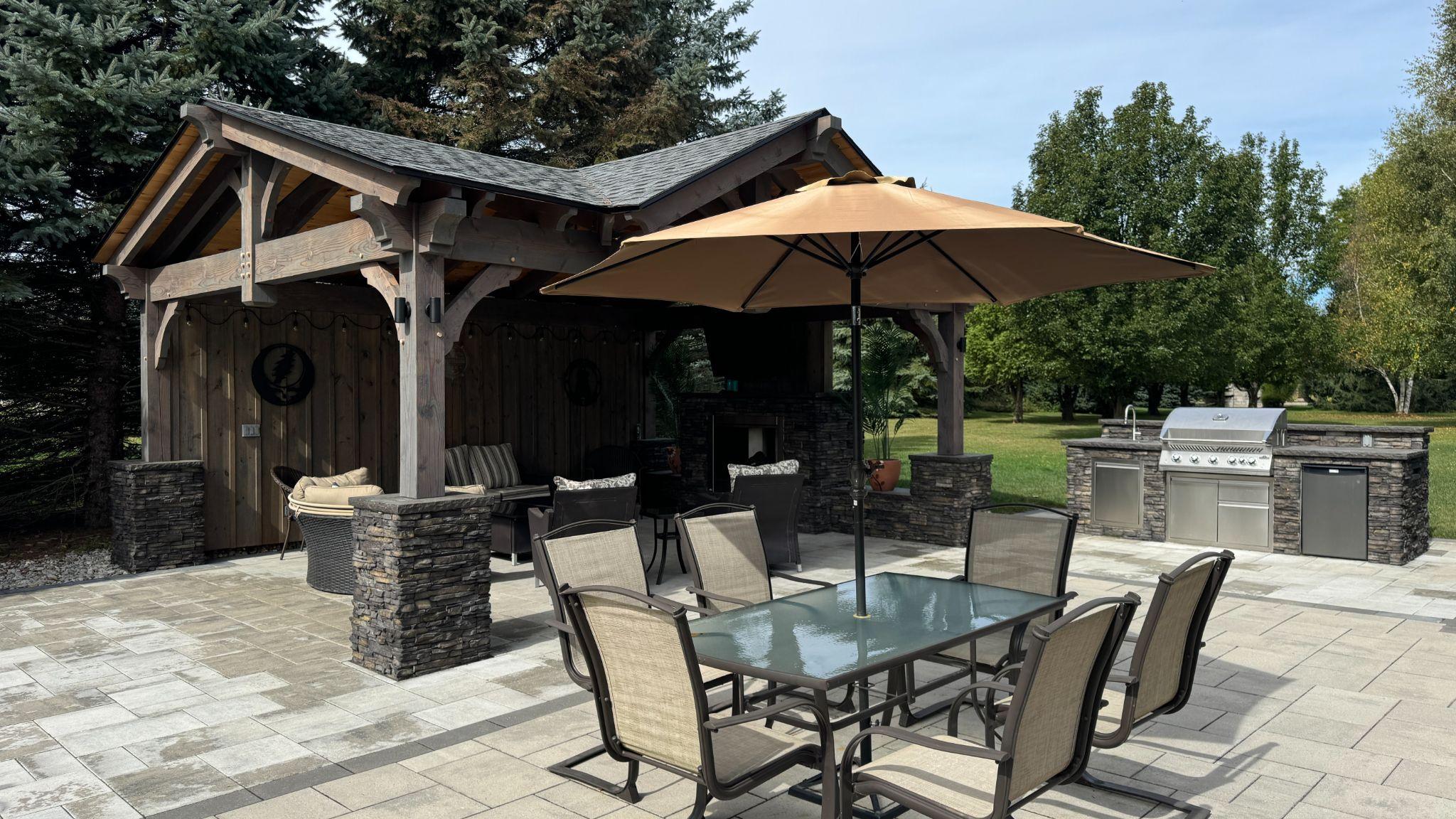
The better prepared you are before your first conversation, the more useful that conversation will be. Before submitting a landscaping quote request in Hamilton, these five steps will make your site visit significantly more productive.
Know roughly what you want. Even an approximate scope, like “we want a patio and a pool” versus “we want a complete backyard redesign,” helps your contractor prepare for the site visit rather than arriving without context. You don’t need to have made final decisions; you need a starting point.
Take photos of your current yard from multiple angles. Include any problem areas: slopes, areas where water pools after rain, structures you want removed, and anything that currently concerns you about the space. A visual record of the existing site saves time and gives the contractor useful information before they arrive.
Note your timing constraints. A specific event, a move-in date, or a season you want the project completed by. These help your contractor tell you early whether your timeline is workable or needs adjustment.
Think about your budget in general terms. Not a specific number, but a sense of whether this is a $10,000 project or a $100,000 landscaping project. That context shapes everything about the recommendation you’ll receive and the options your contractor explores with you.
Bring inspiration images. Platforms like Instagram and Houzz communicate faster than descriptions. They help your contractor understand what “modern” or “natural” means to you specifically — not in the abstract. For more on where to gather ideas, see our landscaping guide for Hamilton.
Green Collar’s quote process starts with a site visit so we can understand your property before we discuss scope or cost. There’s no obligation, and the conversation costs you nothing.
When you understand what actually drives landscaping costs, the inconsistent numbers you found online start to make sense: they’re not contradictory, they’re reflecting genuinely different projects, different sites, and different material standards. The only number that matters is the one that accounts for your property specifically. Green Collar works across Hamilton, Ancaster, Burlington, Dundas, Stoney Creek, Waterdown, and Brantford. The first step is a site visit with no obligation, no guesswork.
Ready to understand what your project will actually cost? Start with a free site visit from Green Collar. No obligation, no guesswork; just a conversation grounded in your actual property. Request a free quote.
Tags: